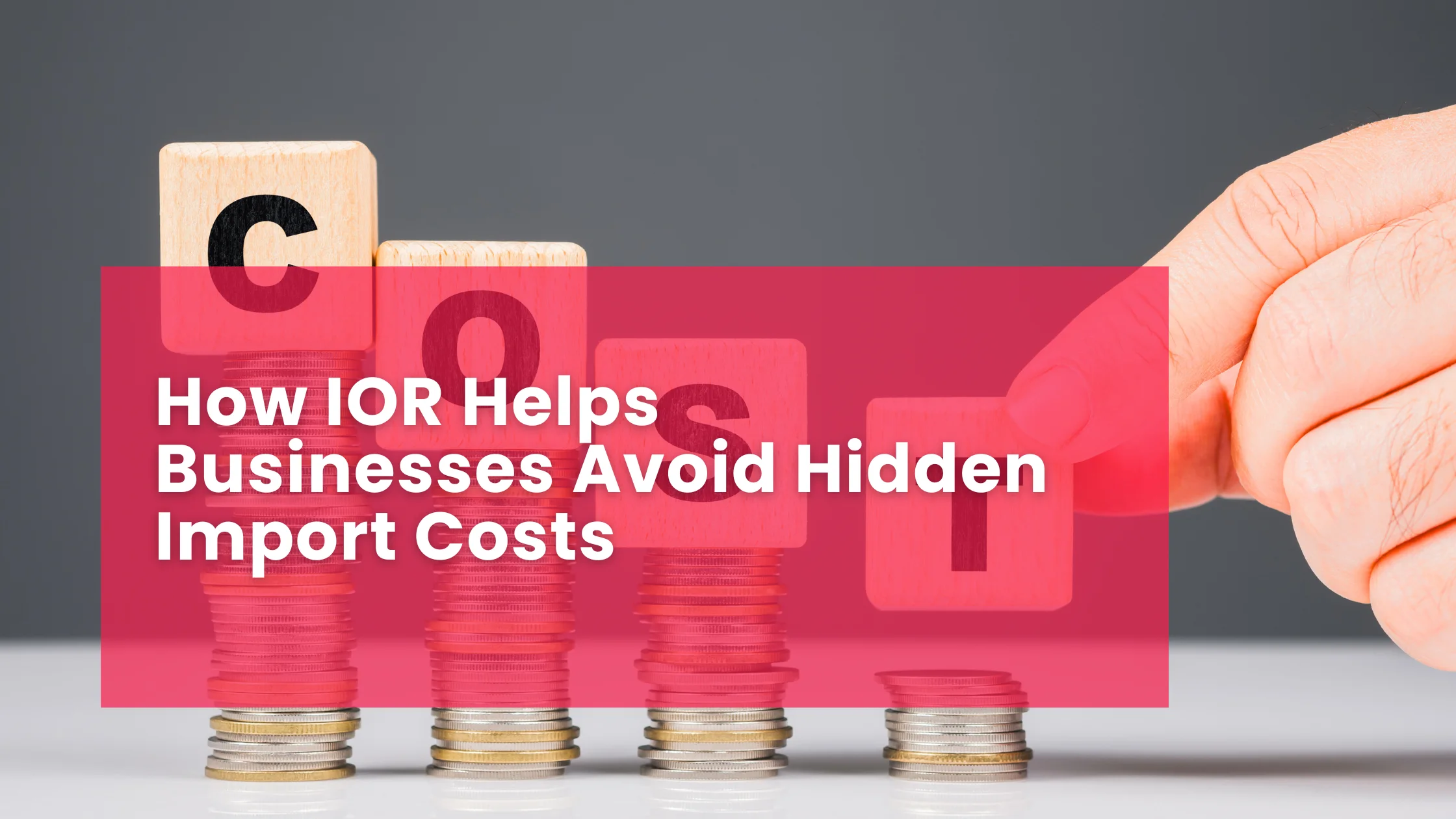
International trade creates opportunities for growth, market expansion, and supply chain diversification. However, importing products across borders often involves costs that businesses fail to anticipate during the planning stage. While freight charges, duties, and taxes are usually included in budgets, many organizations are surprised by additional expenses that emerge during customs clearance and regulatory compliance processes.
These hidden import costs can significantly impact profitability, disrupt supply chain timelines, and create operational challenges. For businesses importing into unfamiliar markets, the risks become even greater. Regulatory requirements vary widely across countries, and a single compliance oversight can result in delays, penalties, storage fees, product seizures, or unexpected administrative expenses.
This is where an Importer of Record (IOR) becomes a critical component of successful global trade operations. By assuming legal responsibility for imported goods and ensuring compliance with local regulations, an experienced IOR partner helps businesses navigate complex import requirements while avoiding costly surprises.
For companies expanding into international markets, understanding the role of an IOR is essential for controlling costs, maintaining compliance, and protecting supply chain efficiency.
Understanding Hidden Import Costs
When businesses calculate import expenses, they typically focus on visible costs such as:
- Freight transportation
- Customs duties
- Value-added tax (VAT)
- Insurance
- Warehousing
- Distribution
However, many import-related expenses are less obvious and often emerge only after shipments are already in transit.
These hidden costs can include:
- Customs penalties
- Regulatory compliance violations
- Documentation errors
- Product classification mistakes
- Demurrage and detention charges
- Storage fees
- Customs inspections
- Delayed delivery costs
- Product re-export expenses
- Import license issues
- Administrative processing fees
The challenge is that many of these costs are avoidable when import requirements are properly managed before shipment.
Unfortunately, businesses entering new markets frequently underestimate the complexity of customs regulations, resulting in unexpected expenses that reduce profit margins and increase operational risk.
What Is an Importer of Record (IOR)?
An Importer of Record (IOR) is the legal entity responsible for ensuring imported goods comply with all applicable laws, regulations, customs requirements, and government agency standards in the destination country.
The IOR assumes responsibility for:
- Import documentation
- Regulatory compliance
- Customs declarations
- Product classification
- Duty and tax management
- Import licensing requirements
- Record keeping
- Government reporting obligations
The IOR serves as the official party recognized by customs authorities for the import transaction.
For many organizations, particularly those shipping technology equipment, industrial products, medical devices, telecommunications hardware, or specialized equipment internationally, establishing a local importing entity in every destination country is impractical.
An experienced IOR partner enables companies to enter global markets without creating local legal entities while maintaining full regulatory compliance.
Why Hidden Import Costs Occur
Hidden import costs generally arise from one of three primary causes:
Regulatory Complexity
Every country maintains unique import regulations, product standards, customs procedures, and documentation requirements.
A shipment that clears customs smoothly in one country may face extensive scrutiny in another.
Businesses often encounter challenges involving:
- Product certifications
- Labeling requirements
- Safety standards
- Environmental regulations
- Import permits
- Industry-specific restrictions
Failure to comply can result in delays, fines, or rejected shipments.
Documentation Errors
Customs authorities rely heavily on accurate documentation.
Even minor discrepancies can trigger:
- Shipment holds
- Additional inspections
- Administrative penalties
- Storage fees
Common issues include:
- Incorrect invoices
- Missing certificates
- Inaccurate product descriptions
- Errors in tariff classification
- Incomplete shipping documentation
Lack of Local Expertise
Import regulations are constantly evolving.
Organizations operating internationally may struggle to stay current with changing requirements across multiple jurisdictions.
Without local compliance expertise, businesses face increased risk of:
- Unexpected customs charges
- Regulatory violations
- Clearance delays
- Additional administrative costs
An IOR helps mitigate these risks by providing localized regulatory knowledge and compliance oversight.
How an IOR Helps Prevent Costly Customs Delays
Customs delays represent one of the most common sources of hidden import expenses.
When goods remain held at ports, airports, or customs facilities, costs accumulate rapidly.
Potential expenses include:
- Storage charges
- Demurrage fees
- Container detention costs
- Additional transportation expenses
- Project delays
- Customer service disruptions
An experienced IOR reduces the likelihood of delays by ensuring all import documentation is complete, accurate, and compliant before goods arrive.
This proactive approach enables customs authorities to process shipments more efficiently, reducing the risk of costly disruptions.
For time-sensitive shipments, such as data center equipment, telecommunications infrastructure, medical devices, or manufacturing components, avoiding delays can deliver substantial financial benefits.
Reducing Compliance-Related Penalties
Customs authorities worldwide continue to strengthen enforcement efforts related to import compliance.
Penalties may result from:
- Incorrect declarations
- Underreported values
- Improper product classification
- Missing permits
- Inaccurate country-of-origin information
- Regulatory violations
Even when errors are unintentional, businesses may face financial penalties and increased customs scrutiny.
An IOR assumes responsibility for ensuring compliance requirements are satisfied before shipment, significantly reducing the risk of enforcement actions.
This level of compliance management is particularly valuable for businesses operating in highly regulated industries where penalties can be substantial.
Preventing Incorrect Tariff Classification Costs
Tariff classification plays a critical role in determining duty rates and regulatory requirements.
Misclassification can create several problems:
- Overpayment of duties
- Underpayment of duties
- Customs audits
- Financial penalties
- Shipment delays
Many businesses lack specialized expertise in customs tariff systems and may inadvertently classify products incorrectly.
An experienced IOR understands local customs classification requirements and helps ensure products are categorized accurately.
Proper classification can prevent both compliance issues and unnecessary duty expenditures.
Avoiding Unexpected Licensing and Permit Expenses
Many products require specific licenses, permits, or government approvals before importation.
Examples include:
- Telecommunications equipment
- Medical devices
- Electronics
- Chemicals
- Industrial machinery
- Defense-related products
Failure to secure required authorizations before shipment can result in:
- Customs holds
- Additional administrative costs
- Product confiscation
- Re-export expenses
An IOR evaluates regulatory requirements before importation and coordinates necessary approvals to prevent costly disruptions.
This proactive planning helps organizations avoid emergency compliance expenses that often arise when requirements are discovered too late.
Managing VAT and Tax Obligations More Effectively
Import taxes and VAT obligations vary significantly by jurisdiction.
Without proper planning, businesses may encounter:
- Unexpected tax liabilities
- Cash flow challenges
- Double taxation risks
- Compliance penalties
An IOR helps ensure tax obligations are managed appropriately according to local regulations.
This includes:
- Accurate customs valuation
- Proper tax reporting
- Documentation support
- Regulatory compliance management
Effective tax handling minimizes financial surprises and improves predictability in import operations.
Protecting Businesses Entering New Markets
Market expansion often presents the highest risk for hidden import costs.
When entering a new country, organizations frequently face unfamiliar regulations, customs procedures, and compliance expectations.
Common challenges include:
- Local registration requirements
- Product certifications
- Documentation standards
- Import restrictions
- Industry-specific regulations
Establishing a local legal entity solely for importing products may not be practical during initial market entry.
An IOR provides a strategic solution by enabling businesses to import legally and compliantly without establishing local operations immediately.
This reduces both administrative burden and financial risk during expansion initiatives.
Supporting Technology and High-Value Equipment Imports
Technology companies frequently encounter complex import requirements when shipping equipment internationally.
Examples include:
- Servers
- Networking equipment
- Data center infrastructure
- Telecommunications hardware
- Medical technology
- Laboratory equipment
These products often face additional scrutiny because of:
- Technical certifications
- Security regulations
- Telecommunications approvals
- Industry compliance requirements
A delayed shipment of critical technology infrastructure can result in significant project costs.
An experienced IOR helps ensure regulatory requirements are addressed in advance, minimizing the risk of delays and associated expenses.
Improving Supply Chain Predictability
Supply chain leaders prioritize predictability because unexpected costs can disrupt budgets, project schedules, and customer commitments.
An effective IOR contributes to greater predictability by:
- Identifying regulatory requirements early
- Ensuring documentation accuracy
- Coordinating compliance processes
- Managing customs obligations
- Reducing clearance delays
When import processes become more predictable, organizations gain greater control over logistics costs and operational planning.
This visibility is particularly valuable for multinational companies managing complex international supply chains.
Enhancing Risk Management Across Global Operations
Import compliance is fundamentally a risk management function.
Businesses face numerous risks when moving products internationally, including:
- Regulatory risk
- Financial risk
- Operational risk
- Reputational risk
An IOR helps reduce exposure to each of these areas through structured compliance oversight and local expertise.
Rather than reacting to customs issues after they occur, organizations can proactively address potential challenges before shipments are dispatched.
This approach reduces uncertainty and strengthens supply chain resilience.
The Financial Impact of Hidden Import Costs
Many organizations underestimate the cumulative impact of import-related surprises.
A single shipment delay may generate:
- Storage fees
- Additional handling costs
- Administrative expenses
- Customer penalties
- Project delays
Over time, repeated compliance issues can significantly increase total landed costs.
By investing in proper import management through a qualified IOR partner, businesses often achieve cost savings that exceed the cost of the service itself.
More importantly, they gain confidence that international shipments will move efficiently and compliantly through customs processes.
Key Benefits of Using an IOR
Organizations working with an experienced Importer of Record typically benefit from:
Stronger Compliance
Regulatory requirements are managed proactively, reducing the risk of violations and penalties.
Reduced Delays
Accurate documentation and customs preparation help accelerate clearance processes.
Better Cost Control
Hidden expenses are identified and addressed before shipments move.
Faster Market Entry
Businesses can expand internationally without establishing local legal entities.
Improved Supply Chain Visibility
Compliance processes become more predictable and manageable.
Lower Operational Risk
Professional oversight reduces exposure to customs and regulatory challenges.
Choosing the Right IOR Partner
Not all IOR providers offer the same level of expertise, global reach, or compliance capabilities.
When evaluating an IOR partner, businesses should consider:
- Global coverage
- Industry expertise
- Regulatory knowledge
- Customs compliance experience
- Local market capabilities
- Documentation management processes
- End-to-end logistics support
The ideal partner should provide more than transactional import services. They should function as a strategic extension of your supply chain team, helping identify risks, streamline operations, and support long-term global growth.
Why Businesses Trust AGOL Worldwide Inc
As global trade becomes increasingly complex, businesses require logistics partners capable of navigating evolving regulations, customs requirements, and international supply chain challenges.
AGOL Worldwide Inc delivers comprehensive global logistics solutions designed to support compliant, efficient, and cost-effective international trade operations.
With expertise spanning:
- International logistics
- Freight forwarding
- Customs brokerage
- Importer of Record services
- Exporter of Record solutions
- Supply chain management
- Global trade compliance
AGOL Worldwide Inc helps businesses move products across borders with confidence.
By combining regulatory expertise, operational excellence, and global logistics capabilities, AGOL Worldwide Inc supports organizations seeking to reduce risk, improve supply chain efficiency, and avoid the hidden costs that often accompany international imports.
Final Thoughts
Hidden import costs can erode profit margins, disrupt operations, and create significant compliance risks for businesses engaged in global trade. While many organizations focus on transportation expenses and duties, the most costly challenges often stem from regulatory oversights, documentation errors, customs delays, and compliance failures.
An experienced Importer of Record plays a critical role in preventing these issues by ensuring imports meet all legal and regulatory requirements before shipments reach their destination. Through proactive compliance management, accurate documentation, and local expertise, an IOR helps businesses reduce unexpected expenses while improving supply chain reliability.
For organizations expanding internationally, importing high-value equipment, or managing complex global supply chains, partnering with a trusted IOR provider can be a strategic advantage.
AGOL Worldwide Inc offers customized Importer of Record, customs compliance, freight forwarding, and global logistics solutions tailored to the unique requirements of international businesses. Connect with AGOL Worldwide Inc today to discover how our global trade experts can help you simplify cross-border operations, reduce hidden import costs, and build a more resilient international supply chain.