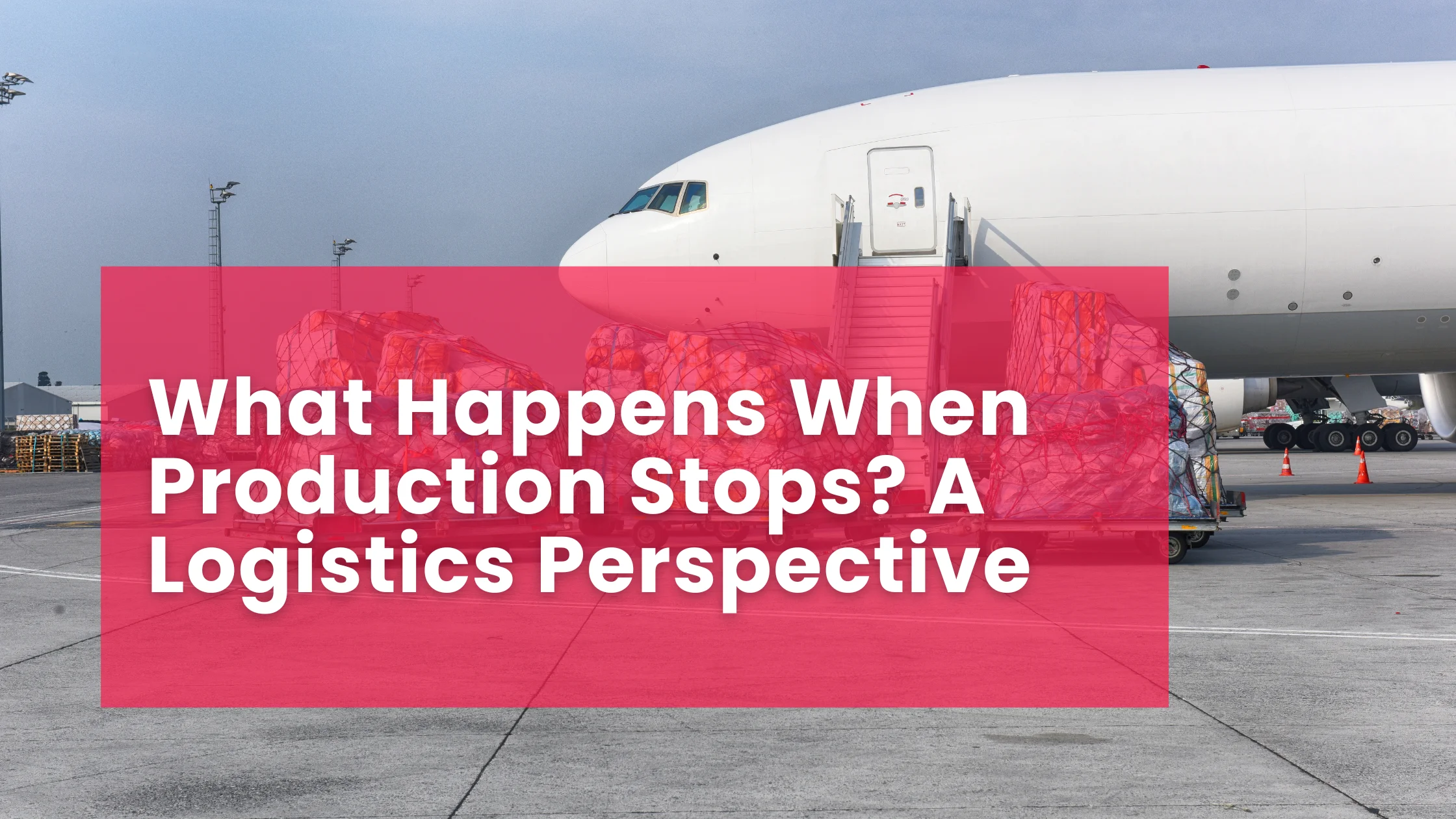
In today’s interconnected global economy, production is not just a manufacturing function—it is the heartbeat of entire supply chains. When production stops, the consequences ripple far beyond factory floors. From procurement delays to customer dissatisfaction, the impact can be immediate, widespread, and costly.
For businesses operating across borders, these disruptions are magnified. International logistics, compliance requirements, inventory positioning, and transportation dependencies all become critical pressure points. Understanding what happens when production halts—and how to respond effectively—is essential for importers, exporters, supply chain managers, and procurement leaders.
This article explores the real-world logistics implications of production stoppages and how a strategic partner like AGOL Worldwide Inc helps businesses maintain continuity, minimize losses, and recover faster.
The Immediate Shockwave: Supply Chain Disruption Begins
When production stops, the first and most obvious consequence is a break in supply continuity. However, the deeper issue lies in how quickly this disruption spreads across the supply chain.
Raw Material Flow is Interrupted
Production stoppages often begin upstream. Whether caused by supplier failure, geopolitical instability, regulatory issues, or unexpected demand shifts, the halt in production disrupts the flow of raw materials.
- Suppliers may pause shipments
- Procurement teams scramble for alternatives
- Lead times increase unpredictably
This creates a cascading effect, where even companies not directly impacted by the stoppage begin experiencing delays.
Inventory Imbalance
Inventory strategies are designed around predictable production cycles. When production halts:
- Safety stock may be depleted faster than expected
- Warehouses may face shortages or excess stock depending on demand
- Distribution centers struggle to maintain order fulfillment
Companies operating on just-in-time (JIT) models are especially vulnerable, as they rely heavily on consistent production output.
Transportation Bottlenecks and Idle Capacity
Logistics is tightly synchronized with production schedules. When manufacturing stops, transportation networks are immediately affected.
Freight Disruptions
- Booked shipments may be canceled or delayed
- Containers remain idle at ports or warehouses
- Air freight allocations may go unused
This results in inefficiencies and increased costs, as logistics providers must reallocate resources.
Carrier Challenges
Shipping lines, airlines, and trucking companies rely on predictable cargo volumes. A sudden drop in shipments leads to:
- Underutilized capacity
- Route adjustments
- Increased freight rates due to volatility
For businesses, this means less control over transportation planning and higher costs when operations resume.
Financial Impact: Costs Rise While Revenue Falls
Production stoppages create a dual financial burden—reduced revenue and increased operational costs.
Increased Logistics Costs
- Expedited shipping to recover delays
- Emergency sourcing from alternative suppliers
- Storage fees for idle inventory
These unexpected expenses can significantly impact profit margins.
Contractual and Compliance Risks
Failure to meet delivery timelines may result in:
- Penalties from customers
- Breach of contract claims
- Loss of long-term business relationships
In international trade, delays can also trigger customs complications, additional duties, or regulatory scrutiny.
Customs and Compliance Complications
Global trade involves strict regulatory frameworks. When production stops, compliance risks increase.
Documentation Mismatches
Delays can lead to discrepancies between:
- Shipping documents
- Commercial invoices
- Customs declarations
This can result in shipment holds, inspections, or fines.
Import/Export Delays
Customs authorities may question:
- Changes in shipment schedules
- Unusual routing patterns
- Sudden changes in supplier origin
Without proper management, these issues can compound delays and increase costs.
Customer Impact: The Hidden Cost of Disruption
While operational challenges are immediate, the long-term impact often lies in customer relationships.
Missed Delivery Commitments
Customers expect reliability. Production stoppages can lead to:
- Delayed deliveries
- Partial shipments
- Order cancellations
Brand Reputation at Risk
In competitive markets, reliability is a key differentiator. Repeated disruptions can damage:
- Customer trust
- Brand credibility
- Market positioning
Recovering from reputational damage often takes longer than resolving operational issues.
The Ripple Effect Across Global Supply Chains
Production stoppages rarely exist in isolation. They create a ripple effect that impacts multiple stakeholders.
Multi-Tier Supplier Disruption
A halt at one production facility can affect:
- Tier 1 suppliers (direct partners)
- Tier 2 and Tier 3 suppliers (indirect partners)
- Distribution networks across regions
Global Trade Imbalance
When multiple production centers are affected:
- Trade lanes become imbalanced
- Freight rates fluctuate
- Capacity shortages or surpluses emerge
This creates volatility across the entire logistics ecosystem.
Risk Mitigation: Preparing for the Inevitable
Production disruptions cannot always be avoided, but their impact can be minimized with the right strategies.
Diversified Sourcing
Relying on a single supplier or region increases risk. Businesses should:
- Develop multi-supplier networks
- Explore alternative sourcing regions
- Maintain backup vendor agreements
Strategic Inventory Planning
Balancing cost efficiency with resilience is key:
- Maintain buffer stock for critical items
- Use demand forecasting tools
- Align inventory with risk exposure
Flexible Logistics Networks
Agility is essential in times of disruption:
- Use multiple transportation modes
- Diversify shipping routes
- Partner with global logistics providers
The Role of Logistics Partners in Crisis Management
When production stops, businesses need more than internal solutions—they need experienced logistics partners who can navigate complexity and deliver results.
End-to-End Visibility
A global logistics partner provides:
- Real-time tracking of shipments
- Visibility across supply chain nodes
- Data-driven insights for decision-making
Rapid Response Capabilities
In times of disruption, speed matters:
- Alternative routing solutions
- Expedited freight options
- Immediate capacity allocation
Compliance Expertise
Navigating international regulations requires expertise:
- Accurate documentation handling
- Customs clearance support
- Regulatory compliance across regions
How AGOL Worldwide Inc Supports Business Continuity
AGOL Worldwide Inc plays a critical role in helping businesses navigate production stoppages and maintain operational resilience.
Global Network Strength
With a robust international presence, AGOL Worldwide Inc ensures:
- Access to multiple sourcing and shipping options
- Strong relationships with carriers and suppliers
- Seamless coordination across regions
Integrated Logistics Solutions
From freight forwarding to customs brokerage, AGOL offers:
- End-to-end supply chain management
- Flexible transportation solutions
- Warehousing and distribution support
Proactive Risk Management
AGOL Worldwide Inc helps businesses stay ahead of disruptions by:
- Identifying potential risks early
- Developing contingency plans
- Providing strategic guidance
Real-World Scenarios: When Production Stops
Understanding theoretical risks is important, but real-world scenarios highlight the true impact of production stoppages.
Scenario 1: Supplier Shutdown
A key supplier halts production due to regulatory issues.
Impact:
- Immediate shortage of critical components
- Delayed manufacturing schedules
- Increased sourcing costs
Logistics Response:
- Identify alternative suppliers
- Expedite shipments from new sources
- Adjust inventory distribution
Scenario 2: Geopolitical Disruption
Political instability affects a major manufacturing region.
Impact:
- Export restrictions
- Transportation delays
- Increased compliance scrutiny
Logistics Response:
- Reroute shipments through alternative regions
- Ensure compliance with changing regulations
- Maintain communication with stakeholders
Scenario 3: Natural Disaster
A natural disaster disrupts production facilities.
Impact:
- Infrastructure damage
- Workforce disruption
- Supply chain breakdown
Logistics Response:
- Activate emergency logistics plans
- Use alternative transportation modes
- Prioritize critical shipments
Building a Resilient Supply Chain
Resilience is no longer optional—it is a competitive advantage.
Digital Transformation
Technology plays a key role in managing disruptions:
- Supply chain visibility platforms
- Predictive analytics
- Automated workflows
Collaboration and Communication
Strong partnerships improve response times:
- Transparent communication with suppliers
- Collaboration with logistics partners
- Alignment across internal teams
Continuous Improvement
Post-disruption analysis is essential:
- Identify weaknesses
- Improve processes
- Strengthen contingency plans
The Future of Logistics in a Disrupted World
Global supply chains are becoming more complex, and disruptions are becoming more frequent. Businesses must adapt to this new reality.
Increased Focus on Agility
Companies are prioritizing:
- Flexible supply chain models
- Rapid response capabilities
- Decentralized production strategies
Sustainability Considerations
Balancing resilience with sustainability:
- Optimizing transportation routes
- Reducing carbon footprint
- Implementing green logistics practices
Strategic Partnerships
The role of logistics providers is evolving:
- From service providers to strategic partners
- From reactive solutions to proactive planning
- From transactional relationships to long-term collaboration
Conclusion: Turning Disruption into Opportunity
When production stops, the impact is immediate—but it does not have to be devastating. Businesses that understand the logistics implications and prepare accordingly can turn disruption into an opportunity for growth and improvement.
The key lies in resilience, agility, and strong partnerships.
AGOL Worldwide Inc stands as a trusted global logistics partner, helping businesses navigate uncertainty with confidence. From managing complex international shipments to ensuring regulatory compliance and optimizing supply chain performance, AGOL delivers solutions that keep businesses moving—even when production comes to a halt.
If your business is looking to strengthen its supply chain, mitigate risks, and ensure continuity in an unpredictable world, now is the time to act.
Connect with AGOL Worldwide Inc today to explore customized global logistics solutions designed to keep your operations resilient, efficient, and future-ready.