Every Minute on the Ground Comes at a Cost
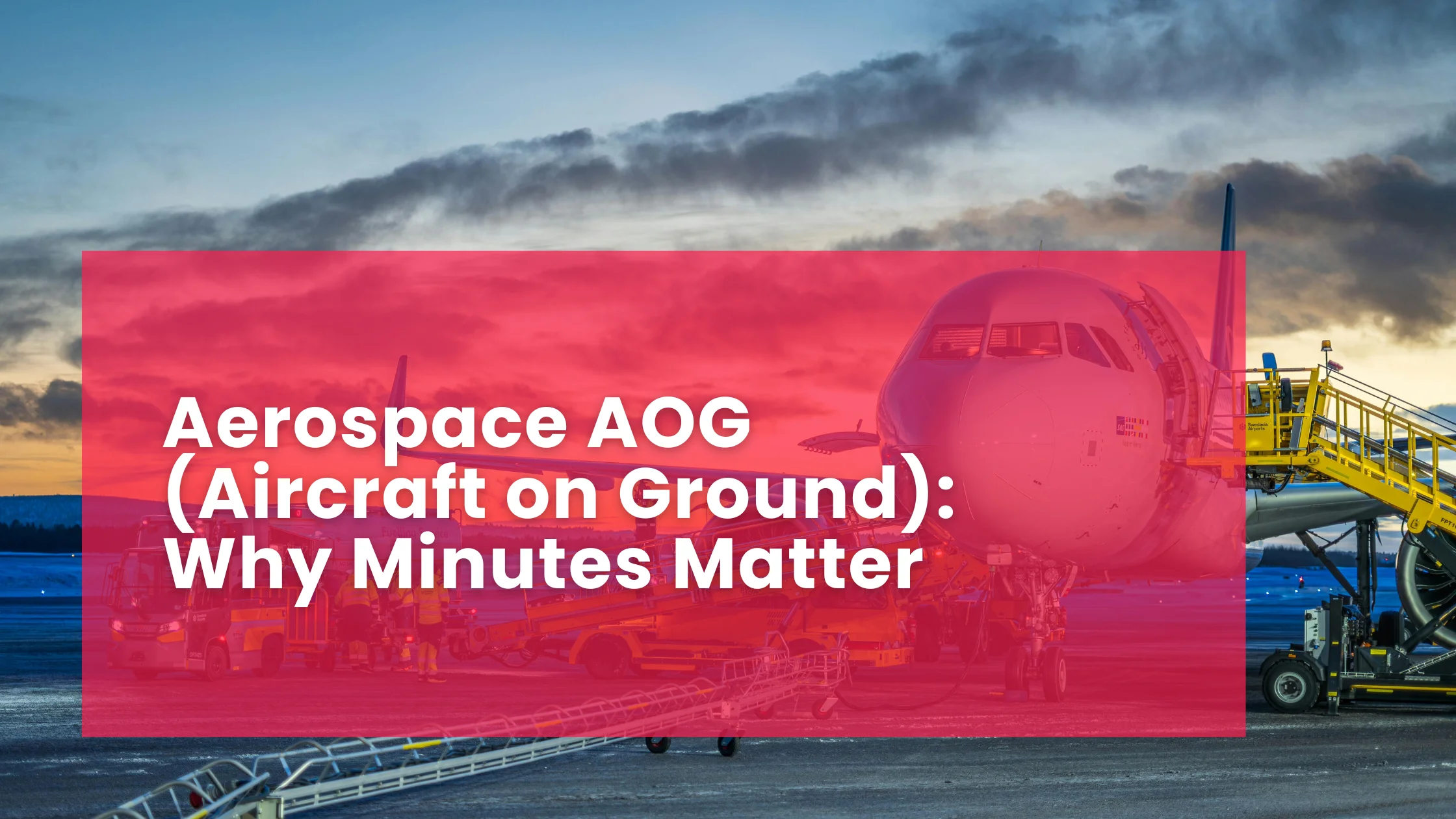
In the aviation industry, time is one of the most valuable assets. Whether it’s a commercial airline carrying hundreds of passengers, a cargo aircraft transporting critical freight, or a private jet supporting executive travel, every aircraft is expected to operate according to a carefully planned schedule. When an unexpected mechanical issue prevents an aircraft from flying, the industry refers to it as an Aircraft on Ground (AOG) situation.
An AOG event is far more than a maintenance issue. It is a business emergency that can affect airlines, maintenance providers, manufacturers, suppliers, airports, passengers, and global supply chains. Delayed departures, canceled flights, missed connections, disrupted cargo schedules, and mounting operational costs begin accumulating within minutes.
The ability to source, transport, clear customs, and deliver replacement aircraft components as quickly as possible often determines how long an aircraft remains grounded.
This is where AGOL Worldwide Inc delivers exceptional value.
As a trusted provider of international logistics, freight forwarding, customs brokerage, and supply chain solutions, AGOL Worldwide Inc helps aerospace organizations respond rapidly to AOG emergencies by coordinating time-critical shipments across international borders with speed, compliance, and precision.
What Does Aircraft on Ground (AOG) Mean?
Aircraft on Ground (AOG) refers to any situation where an aircraft cannot safely operate because it requires immediate maintenance, repair, or replacement parts.
Common causes include:
- Engine component failures
- Hydraulic system issues
- Avionics malfunctions
- Landing gear problems
- Flight control component failures
- Electrical system faults
- Structural damage
- Bird strikes
- Unexpected maintenance findings
- Software or communication equipment failures
Since aviation regulations require strict compliance with safety standards, airlines cannot simply postpone repairs. Certified replacement parts must be sourced and delivered immediately.
The challenge is that these parts are rarely stored at every airport worldwide.
Instead, they may be located thousands of miles away in another country, requiring urgent international transportation.
Why Every Minute Matters
Unlike standard freight shipments, AOG logistics operate under extraordinary time pressure.
Every additional hour of downtime can result in:
- Flight cancellations
- Missed passenger connections
- Aircraft repositioning costs
- Crew scheduling disruptions
- Cargo delivery delays
- Airport parking fees
- Contractual penalties
- Customer dissatisfaction
- Brand reputation damage
For commercial airlines, a grounded aircraft may generate little or no revenue while operating costs continue to increase.
Cargo airlines face similar challenges as delayed shipments affect manufacturers, healthcare providers, retailers, and supply chains worldwide.
Business aviation operators must also minimize downtime because executives rely on predictable travel schedules.
In every case, logistics becomes one of the most important factors in returning the aircraft to service.
The Complexity Behind AOG Logistics
Delivering an aircraft component internationally sounds straightforward until considering the realities involved.
An urgent shipment may require:
- Immediate supplier pickup
- Export documentation
- Dangerous goods compliance
- Airline booking
- Charter aircraft arrangements
- Customs clearance
- Import permits
- Airport handling
- Secure transportation
- Final delivery to the maintenance facility
Each step must happen with minimal delay.
Any mistake in paperwork, customs documentation, routing, or compliance can add hours—or even days—to the delivery schedule.
That delay directly extends aircraft downtime.
Common Aircraft Parts Shipped Under AOG Conditions
AOG shipments cover a wide range of specialized aviation components, including:
Engine Components
These include turbines, compressors, fuel pumps, sensors, blades, and combustion system parts that are essential for aircraft operation.
Landing Gear Systems
Landing gear assemblies are among the most safety-critical systems in aviation and often require immediate replacement.
Avionics Equipment
Navigation systems, communication equipment, radar modules, cockpit displays, flight management computers, and electronic control units frequently move under AOG priority.
Hydraulic Components
Hydraulic pumps, valves, actuators, hoses, and reservoirs are commonly required during emergency maintenance.
Aircraft Wheels and Brakes
Brake assemblies, wheel hubs, bearings, and tires are frequently shipped to maintenance facilities worldwide.
Electrical Components
Power distribution units, wiring assemblies, generators, converters, batteries, and electronic modules often require expedited transportation.
Composite Structures
Aircraft panels, fairings, doors, and structural repair kits must sometimes be delivered immediately after damage inspections.
Why Global Supply Chains Make AOG More Challenging
Modern aircraft contain thousands of specialized components sourced from manufacturers around the world.
A single replacement part may involve:
- Manufacturing in Germany
- Warehousing in Singapore
- Export through the Netherlands
- Air transport to Dubai
- Customs clearance in Australia
- Final delivery to a maintenance hangar
Each border crossing introduces additional compliance requirements.
Documentation errors can delay customs clearance.
Flight capacity shortages can delay transportation.
Weather events may disrupt routing.
Local regulations differ between countries.
Managing these variables requires logistics professionals with deep international expertise.
The Critical Role of Customs Clearance
One of the largest risks in AOG logistics is customs delay.
Many urgent shipments arrive quickly at an international airport only to remain in customs because documentation is incomplete.
Potential issues include:
- Incorrect HS classifications
- Missing invoices
- Improper export declarations
- Import permit requirements
- Security inspections
- Restricted aviation components
- Dual-use technology regulations
Efficient customs brokerage is therefore just as important as fast transportation.
AGOL Worldwide Inc helps clients prepare accurate documentation, coordinate with customs authorities, and reduce unnecessary clearance delays whenever possible.
Transportation Options for AOG Shipments
Every AOG shipment requires an individualized transportation strategy.
Next Flight Out (NFO)
Commercial airline capacity is often the fastest solution when suitable flights are immediately available.
Air Charter
For extremely urgent situations, dedicated charter aircraft eliminate dependence on scheduled airline routes.
On-Board Courier (OBC)
Some critical components travel with a dedicated courier who personally accompanies the shipment throughout the journey, reducing handling delays and enabling faster transfers.
Hand Carry Services
Highly valuable or exceptionally urgent aviation components may be transported directly by experienced logistics professionals.
Express Air Freight
Priority freight services provide expedited transportation while maintaining secure handling procedures.
Choosing the right solution depends on shipment size, urgency, routing, customs requirements, destination infrastructure, and operational costs.
Why Visibility Is Essential During AOG Shipments
AOG logistics teams cannot afford uncertainty.
Maintenance teams need accurate delivery estimates because technicians schedule repairs around part arrivals.
Operations managers require continuous updates to plan aircraft return-to-service timelines.
Procurement teams need shipment transparency for supplier coordination.
Executives require reliable information for operational decision-making.
Real-time shipment visibility helps reduce uncertainty while improving communication across all stakeholders.
Risk Management in Aerospace Logistics
Aircraft components are among the world’s most valuable and tightly regulated cargo.
Many shipments require:
- Shock protection
- Temperature management
- Secure packaging
- Tamper-resistant handling
- Chain-of-custody documentation
- Insurance coordination
- Regulatory compliance
- Specialized labeling
Risk management begins before pickup and continues until final delivery.
Professional logistics providers evaluate transportation risks, customs requirements, routing alternatives, and contingency plans before the shipment begins moving.
Supporting MRO Operations Worldwide
Maintenance, Repair, and Overhaul (MRO) facilities depend on reliable logistics to maintain aircraft availability.
These organizations often require:
- Scheduled inventory replenishment
- Emergency AOG support
- International sourcing
- Customs brokerage
- Warehouse coordination
- Reverse logistics
- Warranty returns
- Component exchanges
An experienced logistics partner helps MRO providers maintain operational efficiency while reducing inventory carrying costs.
The Importance of Supplier Coordination
A successful AOG shipment depends on more than transportation.
Suppliers, manufacturers, freight forwarders, customs brokers, airlines, airports, maintenance providers, and final delivery partners must work together seamlessly.
Effective coordination includes:
- Immediate shipment booking
- Rapid supplier communication
- Export documentation preparation
- Customs compliance verification
- Flight monitoring
- Ground transportation planning
- Delivery confirmation
When every stakeholder shares accurate information, delays become easier to avoid.
Technology Is Transforming Aerospace Logistics
Digital supply chains continue to improve AOG response capabilities.
Today’s logistics operations increasingly benefit from:
- Shipment tracking platforms
- Electronic documentation
- Automated customs processing
- Predictive inventory planning
- Data analytics
- Transportation management systems
- Digital proof of delivery
Technology improves visibility while enabling faster decision-making during high-pressure situations.
International Regulations Cannot Be Overlooked
Aviation shipments often involve strict regulatory oversight.
Organizations may need to comply with:
- Export control regulations
- Aviation safety standards
- Dangerous goods requirements
- Customs legislation
- Security screening
- Import licensing
- Trade compliance programs
Failure to meet regulatory obligations can result in shipment delays, financial penalties, or denied entry.
Experienced logistics professionals help organizations navigate these complex international requirements with confidence.
Preparing for the Next AOG Event
Although AOG situations cannot always be prevented, organizations can significantly improve response times through proactive planning.
Best practices include:
Build Strategic Supplier Networks
Identify qualified suppliers across multiple regions to reduce sourcing delays.
Maintain Critical Inventory
Stock high-failure components where operationally justified.
Establish Emergency Logistics Partners
Pre-qualified logistics providers can begin coordinating shipments immediately when emergencies occur.
Standardize Documentation
Prepared templates reduce customs processing delays.
Develop Response Procedures
Internal escalation plans ensure maintenance, procurement, logistics, and executive teams respond quickly.
Review Transportation Options
Understand when to use commercial freight, charter aircraft, or onboard courier services.
Prepared organizations consistently recover from AOG events faster than those relying on reactive decision-making.
Why Companies Choose AGOL Worldwide Inc
Time-critical aerospace logistics requires more than transportation.
It requires coordination, compliance, communication, and international expertise.
AGOL Worldwide Inc supports organizations with comprehensive logistics solutions designed for complex global supply chains.
Our capabilities include:
- International air freight coordination
- Global freight forwarding
- Time-critical shipment management
- Customs brokerage
- Import and export compliance
- Door-to-door logistics
- Cross-border transportation
- Supply chain visibility
- Global trade support
- Tailored logistics planning
Our experienced logistics professionals understand that every shipment represents more than cargo.
It represents production schedules, customer commitments, operational continuity, and business performance.
Whether supporting aerospace manufacturers, airlines, maintenance providers, distributors, or international suppliers, AGOL Worldwide Inc works to keep global supply chains moving efficiently and compliantly.
Industries That Benefit from Time-Critical Logistics
While AOG logistics is one of the most demanding transportation sectors, many other industries also depend on rapid global freight solutions.
These include:
- Aerospace and aviation
- Medical devices
- Healthcare
- Semiconductor manufacturing
- Automotive production
- Telecommunications
- Data centers
- Energy and utilities
- Industrial manufacturing
- Defense supply chains
The same expertise required for aircraft emergencies often delivers value across numerous mission-critical industries.
The Future of Aerospace Emergency Logistics
The aviation industry continues to evolve through advanced aircraft technologies, increasingly global manufacturing networks, and growing passenger demand.
As aircraft systems become more sophisticated, logistics providers will play an even greater role in minimizing operational disruptions.
Organizations will increasingly prioritize:
- Faster international transportation
- Smarter inventory strategies
- Improved supply chain resilience
- Greater shipment visibility
- Stronger customs compliance
- Enhanced risk management
- Digital logistics platforms
Companies that invest in resilient logistics partnerships today will be better positioned to respond to tomorrow’s operational challenges.
Conclusion
An Aircraft on Ground event is never just a maintenance problem. It is a race against time that demands immediate coordination, precise execution, and flawless international logistics. Every delayed shipment can extend aircraft downtime, increase operational costs, disrupt passengers and cargo, and impact business performance across the aviation ecosystem.
Success depends on having a logistics partner that understands the urgency of aerospace operations, the complexity of international trade, and the importance of customs compliance. From rapid freight forwarding and customs brokerage to end-to-end supply chain coordination, every stage of the journey must be managed with accuracy and efficiency.
AGOL Worldwide Inc delivers comprehensive global logistics solutions designed to support organizations when time matters most. Whether you need assistance with aerospace AOG shipments, urgent international freight, customs brokerage, or complex cross-border supply chain management, our experienced team is ready to provide customized logistics strategies that keep your operations moving.
Connect with AGOL Worldwide Inc today to discuss your logistics challenges and discover tailored global transportation, freight forwarding, customs brokerage, and supply chain solutions built around your business needs.