Introduction
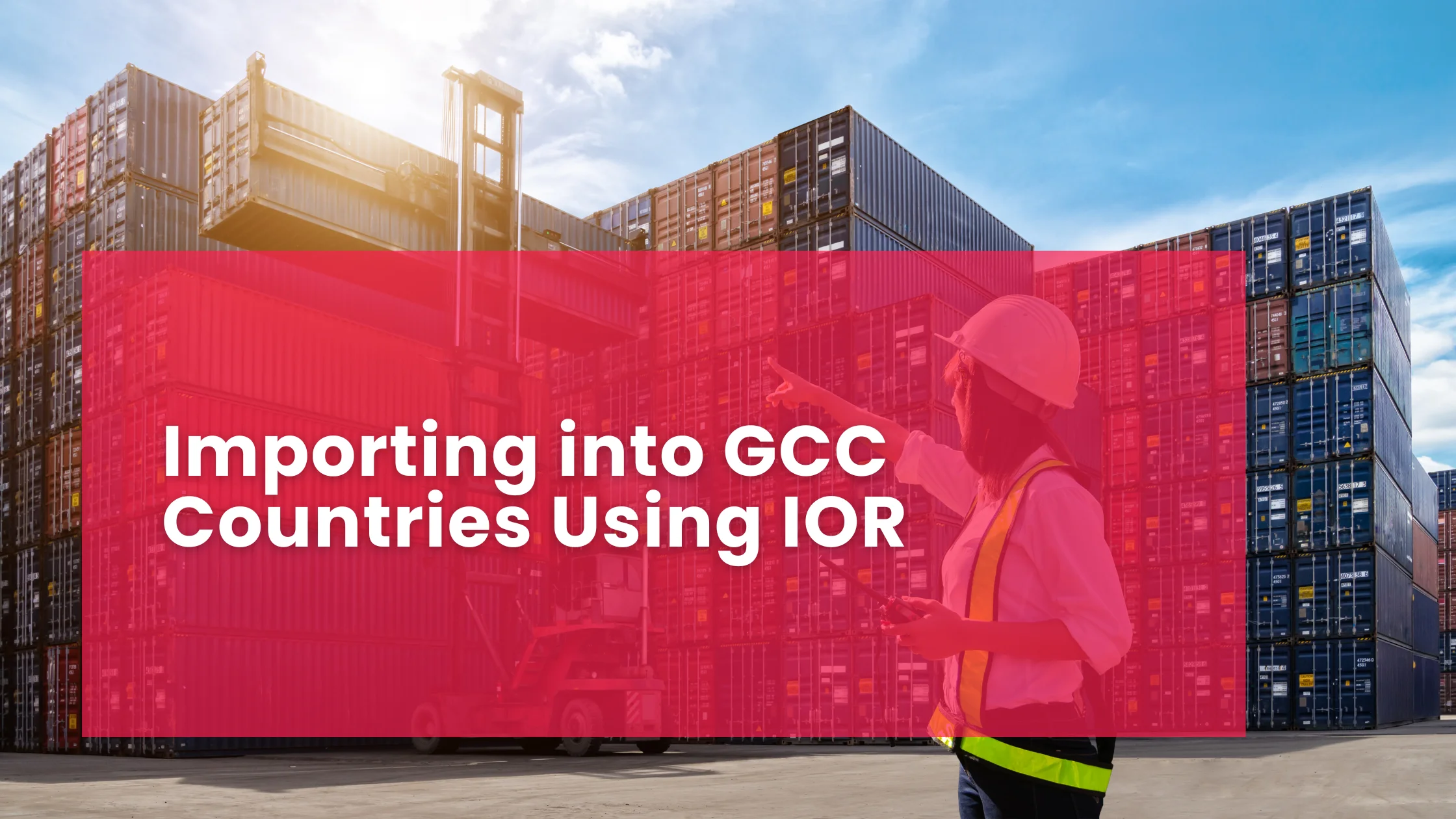
The Gulf Cooperation Council (GCC) region has become one of the world’s most attractive markets for international trade, technology expansion, infrastructure development, healthcare investment, and industrial growth. Comprising Saudi Arabia, United Arab Emirates (UAE), Qatar, Kuwait, Bahrain, and Oman, the GCC offers businesses access to rapidly growing economies, modern infrastructure, and strategic trade routes connecting Europe, Asia, and Africa.
However, importing products into GCC countries is not always straightforward. Foreign companies frequently encounter regulatory complexities, customs compliance requirements, import licensing restrictions, product registration obligations, and local entity requirements that can delay or even prevent shipments from entering the region.
For organizations without a registered legal presence in GCC countries, an Importer of Record (IOR) solution often becomes the most effective way to achieve compliant and efficient market entry.
This guide explores how businesses can successfully import into GCC countries using Importer of Record services, the challenges involved, compliance considerations, and how AGOL Worldwide Inc helps organizations navigate these requirements with confidence.
Understanding the GCC Import Landscape
The GCC region is recognized as one of the most important trade hubs globally. While member states have established a customs union and share certain trade principles, each country maintains specific import regulations, licensing requirements, and compliance standards.
The six GCC member countries include:
- Saudi Arabia
- United Arab Emirates (UAE)
- Qatar
- Kuwait
- Bahrain
- Oman
Organizations commonly import the following into GCC countries:
- IT and telecommunications equipment
- Data center infrastructure
- Medical devices
- Industrial machinery
- Renewable energy equipment
- Manufacturing components
- Network hardware
- Security systems
- Laboratory equipment
- Retail products
Despite strong demand, many foreign businesses discover that importing into these markets requires local representation and regulatory compliance that cannot be managed remotely without specialized support.
What Is an Importer of Record (IOR)?
An Importer of Record (IOR) is the legal entity responsible for ensuring imported goods comply with all local regulations and customs requirements in the destination country.
The Importer of Record assumes responsibility for:
- Import permits and licenses
- Customs documentation
- Product compliance verification
- Duty and tax management
- Regulatory approvals
- Customs declarations
- Government reporting requirements
- Record keeping and audit support
Without a qualified Importer of Record, many international shipments cannot legally clear customs in GCC countries.
For businesses that do not have a local registered entity, an IOR service provides a compliant pathway to import goods without establishing a subsidiary or branch office.
Why Businesses Use IOR Services in GCC Countries
Many organizations entering GCC markets are surprised to learn that customs clearance often requires a locally registered company holding the appropriate import authorizations.
Several common business scenarios make IOR services essential.
Expanding Into New Markets
A technology company based in Europe may need to deploy networking equipment into Saudi Arabia for a customer project.
Establishing a local entity solely for a single deployment can be expensive and time-consuming. An Importer of Record enables immediate market access while maintaining compliance.
Data Center Deployments
Global cloud providers, telecom operators, and infrastructure vendors frequently ship servers, switches, storage systems, and networking equipment into GCC countries.
These projects often have strict deployment timelines that cannot accommodate lengthy company registration processes.
Medical Equipment Imports
Healthcare organizations expanding into the Middle East must comply with strict regulatory requirements for importing medical technologies.
An experienced IOR partner helps ensure documentation and compliance requirements are satisfied before shipment arrival.
Temporary Projects
Engineering firms, consultants, and infrastructure contractors often require equipment imports for short-term projects.
Using an Importer of Record eliminates the need for establishing permanent local operations.
Key Import Challenges in GCC Countries
Although the GCC region promotes international trade, businesses often face several challenges during importation.
Local Entity Requirements
Many imports require a local company to act as the official importer.
Without a registered local entity, customs clearance may not be possible.
An Importer of Record solves this challenge by legally serving as the importer on behalf of the foreign organization.
Product Compliance Requirements
Products entering GCC countries may require:
- Technical certifications
- Product conformity assessments
- Safety approvals
- Telecommunications approvals
- Health authority registrations
Failure to obtain required approvals can result in customs delays, fines, or shipment rejection.
Customs Documentation Accuracy
Customs authorities require complete and accurate documentation, including:
- Commercial invoices
- Packing lists
- Certificates of origin
- Product specifications
- Import permits
- Compliance certificates
Even minor documentation errors can lead to significant delays.
VAT and Tax Compliance
Most GCC countries have implemented Value Added Tax (VAT) systems.
Importers must properly account for:
- Import VAT
- Customs duties
- Excise taxes where applicable
- Tax reporting obligations
Experienced IOR providers ensure tax compliance is managed correctly.
Restricted and Controlled Products
Certain products may require additional government approvals before importation.
Examples include:
- Encryption-enabled devices
- Telecommunications equipment
- Medical devices
- Wireless technologies
- Security equipment
- Specialized industrial machinery
An Importer of Record helps identify these requirements before shipping begins.
GCC Country-Specific Considerations
While GCC nations share certain customs frameworks, each country presents unique compliance considerations.
Saudi Arabia
Saudi Arabia is the largest economy in the GCC and one of the region’s fastest-growing technology and infrastructure markets.
Importers must consider:
- Product conformity requirements
- Regulatory registrations
- Customs valuation procedures
- Technical standards compliance
Technology and telecommunications equipment often require additional review before importation.
United Arab Emirates (UAE)
The UAE serves as a major logistics gateway connecting global markets.
Importers benefit from:
- Advanced customs infrastructure
- Strategic free zones
- Efficient logistics networks
However, compliance requirements still vary depending on product type and destination emirate.
Qatar
Qatar continues investing heavily in infrastructure, technology, and industrial diversification.
Importers should carefully evaluate:
- Product registrations
- Customs documentation requirements
- Sector-specific regulatory approvals
Kuwait
Kuwait’s import regulations emphasize proper licensing and customs compliance.
Businesses frequently rely on IOR services when importing specialized equipment or supporting large infrastructure projects.
Bahrain
Bahrain offers a business-friendly environment and serves as an attractive entry point into GCC markets.
Nonetheless, customs procedures and import regulations must still be followed precisely.
Oman
Oman continues expanding its role as a logistics and trade hub.
Importers must ensure proper compliance with customs regulations and import licensing requirements before shipment arrival.
Benefits of Using an Importer of Record in GCC Countries
Organizations that use professional IOR services gain several strategic advantages.
Faster Market Entry
Companies can begin importing products immediately without waiting months to establish local entities.
This accelerates project timelines and revenue generation.
Reduced Compliance Risk
IOR providers understand local regulations and help ensure imports meet all legal requirements.
This reduces the likelihood of:
- Customs holds
- Penalties
- Shipment rejection
- Regulatory violations
Lower Operational Costs
Establishing and maintaining legal entities across multiple GCC countries can be expensive.
IOR services provide a cost-effective alternative for businesses with project-based or occasional import needs.
Improved Supply Chain Efficiency
Experienced IOR partners coordinate documentation, customs clearance, and compliance processes before shipment arrival.
This minimizes delays and supports predictable delivery schedules.
Access to Local Expertise
Each GCC country has unique regulatory requirements.
A knowledgeable IOR provider brings local expertise that helps businesses avoid costly mistakes.
Industries That Commonly Use IOR Services in GCC Markets
IOR solutions support a wide range of industries operating throughout the Middle East.
Information Technology
Organizations importing:
- Servers
- Storage systems
- Networking hardware
- Cybersecurity appliances
- Cloud infrastructure
often require Importer of Record support.
Telecommunications
Telecom projects frequently involve cross-border movement of highly regulated equipment.
IOR services help manage approvals and compliance requirements.
Healthcare
Medical equipment manufacturers and healthcare providers rely on IOR solutions for compliant importation into GCC markets.
Energy and Utilities
Energy projects require importing complex equipment into multiple jurisdictions.
IOR support helps streamline compliance and customs clearance.
Manufacturing
Manufacturers expanding into GCC markets benefit from compliant importation of machinery, spare parts, and production equipment.
Data Centers
Data center operators require efficient importation of critical infrastructure while meeting strict deployment schedules.
IOR services help ensure projects remain on track.
Best Practices for Importing into GCC Countries
Organizations can improve import success rates by following several best practices.
Plan Compliance Early
Regulatory requirements should be reviewed before products are shipped.
Waiting until cargo arrives often creates unnecessary delays.
Verify Product Classifications
Accurate tariff classifications are critical for determining:
- Customs duties
- Regulatory requirements
- Documentation obligations
Prepare Complete Documentation
Incomplete documentation remains one of the leading causes of customs delays.
Documentation should be reviewed thoroughly before shipment departure.
Work With Experienced Logistics Partners
Successful imports depend on coordination among:
- Freight forwarders
- Customs brokers
- Compliance specialists
- Importer of Record providers
Choosing experienced partners significantly reduces risk.
Understand Country-Specific Regulations
Requirements that apply in one GCC country may not apply in another.
Businesses should evaluate regulations individually for each destination market.
How AGOL Worldwide Inc Supports GCC Imports Through IOR Services
AGOL Worldwide Inc provides comprehensive Importer of Record solutions designed to help businesses import into GCC countries efficiently, legally, and confidently.
Our global logistics expertise supports organizations across industries, including:
- Information technology
- Telecommunications
- Healthcare
- Data centers
- Manufacturing
- Energy
- Industrial infrastructure
Our services include:
Importer of Record Services
We provide compliant IOR solutions for organizations without a local legal entity.
Customs Compliance Management
Our specialists help ensure shipments meet local customs and regulatory requirements.
International Freight Forwarding
We coordinate global transportation by air, ocean, and multimodal freight services.
Customs Brokerage
We facilitate efficient customs clearance while reducing compliance risks.
Trade Documentation Support
Our team helps prepare and review documentation to minimize delays.
End-to-End Supply Chain Solutions
From origin to final delivery, we manage critical logistics processes that support successful international trade.
The Future of GCC Imports
The GCC region continues to attract investment across technology, healthcare, renewable energy, manufacturing, and infrastructure sectors.
Governments throughout the region are implementing ambitious economic diversification programs that increase demand for imported equipment, technology solutions, and specialized products.
As trade volumes continue to grow, compliance requirements are also becoming more sophisticated.
Organizations that invest in proactive compliance strategies and work with experienced Importer of Record providers will be better positioned to capitalize on emerging opportunities while minimizing operational risk.
Conclusion
Importing into GCC countries presents tremendous opportunities for global businesses, but success depends on understanding regulatory requirements, customs procedures, tax obligations, and local import regulations.
For organizations without a local legal presence, an Importer of Record provides a practical and compliant pathway to enter GCC markets while reducing risk and accelerating project timelines.
By leveraging professional IOR services, businesses can focus on growth, customer success, and market expansion while experienced logistics specialists manage the complexities of international trade compliance.
AGOL Worldwide Inc combines global logistics expertise, customs compliance knowledge, freight forwarding capabilities, and Importer of Record solutions to help businesses navigate GCC imports with confidence. Whether you are deploying IT infrastructure, shipping medical equipment, supporting a telecom rollout, or expanding into new Middle Eastern markets, our team is ready to develop a customized logistics strategy tailored to your specific requirements.
Connect with AGOL Worldwide Inc today to discover how our Importer of Record, customs brokerage, freight forwarding, and global supply chain solutions can support your international trade objectives and help your business succeed across GCC markets.