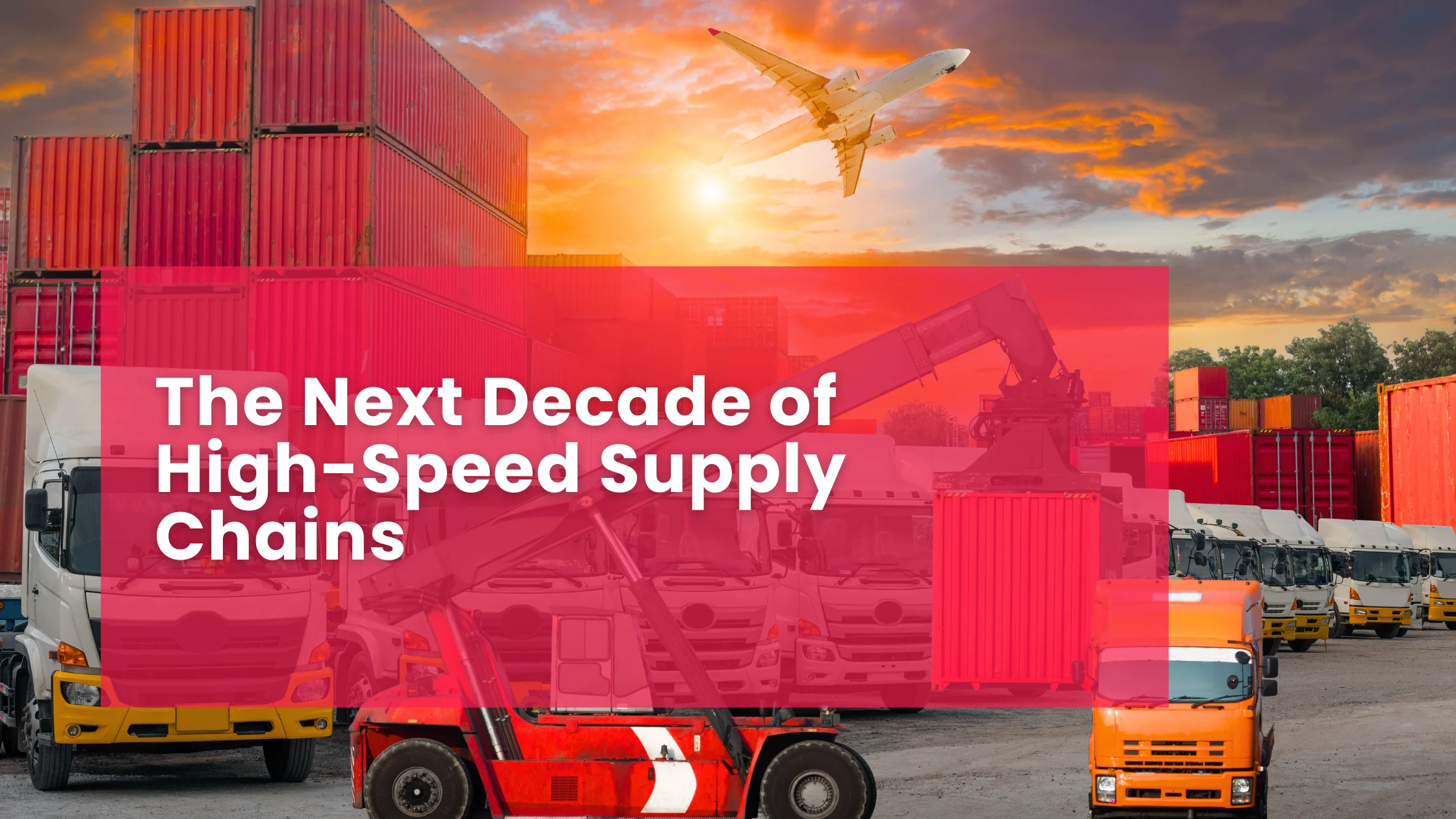
Global trade is entering a new era. Businesses are no longer competing only on product quality or price. Today, speed, visibility, resilience, and adaptability define market leadership. Customers expect faster delivery times, manufacturers demand uninterrupted production cycles, and procurement teams require greater supply chain transparency across multiple regions.
As international trade volumes continue to grow and digital commerce accelerates, high-speed supply chains are becoming essential for companies operating in competitive global markets. Organizations that can move goods efficiently across borders while maintaining compliance, cost control, and operational flexibility will gain a major advantage over slower competitors.
The next decade will reshape how goods are sourced, transported, stored, tracked, and delivered worldwide. Advanced technologies, evolving trade regulations, geopolitical shifts, sustainability goals, and changing customer expectations are all influencing the future of logistics.
For importers, exporters, procurement leaders, and supply chain professionals, understanding these changes is critical. Businesses must prepare now to build supply chains capable of operating at higher speeds without sacrificing reliability or compliance.
As a global logistics partner, AGOL Worldwide Inc helps businesses navigate the increasing complexity of international trade through customized logistics solutions, freight forwarding services, customs brokerage, and supply chain expertise designed for modern global commerce.
The Evolution of High-Speed Supply Chains
Traditional supply chains focused heavily on cost reduction. Businesses prioritized lower manufacturing costs, bulk shipping, and extended planning cycles. While this approach reduced expenses, it often created long lead times, limited flexibility, and increased vulnerability to disruptions.
The modern supply chain operates differently.
Today’s global markets require:
- Faster transit times
- Real-time shipment visibility
- Agile sourcing strategies
- Cross-border compliance expertise
- Predictive logistics planning
- Rapid inventory replenishment
- Reliable last-mile delivery
- Resilient supplier networks
The transition toward high-speed supply chains is not simply about moving products faster. It involves creating synchronized global operations where procurement, transportation, warehousing, customs clearance, and delivery all work together efficiently.
Companies are now investing in logistics strategies that prioritize both speed and resilience. This shift is expected to intensify over the next decade as global competition increases.
The Driving Forces Behind Faster Global Supply Chains
Several major factors are accelerating the demand for high-speed logistics operations worldwide.
E-Commerce and Customer Expectations
E-commerce has permanently changed delivery expectations. Businesses and consumers alike now expect rapid order fulfillment and shorter delivery windows.
Even industrial sectors are adopting faster procurement models. Manufacturers increasingly require expedited delivery of components, machinery, and replacement parts to avoid production delays.
As global buyers expect near-instant access to goods, supply chains must become more responsive and scalable.
Supply Chain Disruptions
Recent global disruptions exposed vulnerabilities in traditional logistics models. Port congestion, geopolitical instability, trade restrictions, labor shortages, and transportation bottlenecks demonstrated the importance of agility and visibility.
Companies now understand that slower supply chains increase operational risk. Businesses are prioritizing diversified sourcing, regional distribution hubs, and faster recovery capabilities to improve continuity.
Data and Visibility
Real-time data is transforming logistics operations. Advanced tracking systems, predictive analytics, and digital supply chain platforms allow businesses to monitor shipments, identify delays early, and optimize routing decisions.
Visibility enables faster decision-making, which directly improves supply chain performance.
Global Manufacturing Expansion
Manufacturing is expanding into new markets across Asia, Africa, Eastern Europe, and Latin America. As production networks become more geographically distributed, companies require logistics providers capable of managing complex international freight movements efficiently.
This growth increases demand for integrated global logistics solutions.
Key Technologies Shaping the Next Decade
Technology will play a defining role in the evolution of high-speed supply chains. Businesses that embrace digital transformation will gain operational advantages in speed, efficiency, and reliability.
Artificial Intelligence and Predictive Logistics
Artificial intelligence is becoming increasingly important in logistics planning and supply chain optimization.
AI-powered systems can:
- Predict shipping delays
- Optimize transportation routes
- Forecast inventory demand
- Improve warehouse efficiency
- Analyze customs clearance risks
- Reduce transportation costs
Predictive logistics enables companies to respond proactively instead of reacting after disruptions occur.
Over the next decade, AI-driven supply chains will become more autonomous, allowing businesses to accelerate operations while minimizing manual inefficiencies.
Automation in Warehousing and Distribution
Warehousing is rapidly evolving through robotics and automation technologies.
Automated systems improve:
- Inventory accuracy
- Picking and packing speed
- Order processing efficiency
- Labor productivity
- Distribution scalability
High-speed fulfillment centers equipped with robotics can process significantly higher shipment volumes while reducing operational delays.
As global trade expands, automated warehousing will become essential for maintaining fast delivery performance.
Internet of Things (IoT) Tracking
IoT-enabled logistics systems provide real-time tracking and monitoring capabilities throughout the transportation process.
Connected devices can monitor:
- Shipment location
- Temperature conditions
- Humidity levels
- Cargo security
- Transit performance
This visibility is especially valuable for industries transporting high-value, sensitive, or time-critical goods.
Real-time monitoring improves risk management and allows businesses to make faster operational decisions.
Blockchain for Supply Chain Transparency
Blockchain technology is helping improve supply chain transparency and document security.
In international trade, blockchain can support:
- Secure shipment documentation
- Faster customs processing
- Improved supplier verification
- Reduced fraud risks
- Greater transaction transparency
While adoption is still developing, blockchain may significantly streamline global trade documentation processes over the next decade.
The Rise of Regionalized Supply Chains
Globalization is evolving rather than disappearing. Businesses are increasingly adopting regional supply chain strategies to improve speed and reduce exposure to disruption.
Instead of relying solely on distant suppliers, companies are building multi-regional networks that place inventory and manufacturing closer to end markets.
Nearshoring and Multi-Sourcing
Many businesses are shifting portions of production to regions closer to their customers. Nearshoring reduces transit times and improves supply chain responsiveness.
At the same time, organizations are diversifying suppliers to avoid dependence on a single source or country.
This approach improves flexibility and reduces operational risk.
Regional Distribution Hubs
Strategically located distribution hubs enable faster fulfillment across multiple markets.
Regional warehousing helps companies:
- Reduce shipping times
- Improve inventory availability
- Lower transportation costs
- Increase customer satisfaction
- Respond quickly to market changes
Over the next decade, regional logistics networks will become increasingly important for high-speed global operations.
Customs Compliance Will Become More Critical
As supply chains move faster, customs compliance becomes even more important.
International trade regulations continue to evolve rapidly. Importers and exporters must navigate changing tariff structures, documentation requirements, trade agreements, and customs procedures across multiple jurisdictions.
Delays caused by customs issues can significantly disrupt high-speed supply chains.
Businesses need logistics partners with deep expertise in:
- Customs brokerage
- Regulatory compliance
- Trade documentation
- Duty optimization
- Import/export controls
- Harmonized tariff classification
Efficient customs management reduces delays and supports seamless international freight movement.
AGOL Worldwide Inc helps businesses manage complex customs requirements while maintaining efficient cross-border operations.
Sustainability and Green Logistics
Sustainability is becoming a core priority in global supply chain planning.
Governments, investors, and customers increasingly expect companies to reduce environmental impact while maintaining operational performance.
The next decade will likely see major growth in sustainable logistics initiatives.
Greener Transportation Networks
Businesses are exploring lower-emission transportation options, including:
- Electric delivery fleets
- Sustainable aviation fuel
- Alternative marine fuels
- Rail freight expansion
- Route optimization technologies
Logistics providers will play a major role in helping organizations meet sustainability goals.
Sustainable Packaging and Warehousing
Companies are also investing in:
- Eco-friendly packaging
- Energy-efficient warehouses
- Reduced waste operations
- Circular supply chain models
Sustainability initiatives are no longer separate from logistics strategy. They are becoming integrated components of modern supply chain management.
The Importance of Supply Chain Resilience
Speed alone is not enough. The next generation of supply chains must also be resilient.
High-speed supply chains that lack flexibility can become vulnerable during disruptions. Businesses need logistics strategies capable of adapting quickly to changing market conditions.
Risk Diversification
Future-ready supply chains require diversified transportation routes, supplier networks, and inventory strategies.
Businesses are increasingly evaluating risks related to:
- Geopolitical instability
- Port congestion
- Trade restrictions
- Natural disasters
- Cybersecurity threats
- Labor shortages
Diversification improves operational continuity and reduces dependency on single points of failure.
Real-Time Decision Making
Modern supply chains depend on rapid operational decision-making.
Real-time visibility enables logistics teams to:
- Reroute shipments quickly
- Adjust inventory allocation
- Manage disruptions proactively
- Improve customer communication
- Maintain service continuity
Faster decision-making directly supports supply chain resilience.
The Future of Freight Forwarding
Freight forwarding is evolving from a transportation coordination function into a strategic supply chain management role.
Businesses increasingly expect logistics providers to deliver:
- End-to-end visibility
- Integrated transportation solutions
- Data-driven insights
- Customs expertise
- Risk management support
- Scalable global operations
Freight forwarders that combine technology, operational expertise, and global network capabilities will become essential business partners.
Digital Freight Platforms
Digital freight platforms are simplifying international shipping processes through automation and centralized visibility.
These systems improve:
- Shipment booking
- Carrier coordination
- Documentation management
- Freight tracking
- Cost analysis
Digital transformation is improving efficiency throughout global freight operations.
Multimodal Transportation Growth
High-speed supply chains increasingly rely on multimodal transportation strategies that combine air, ocean, rail, and ground freight.
Multimodal logistics allows businesses to balance:
- Speed
- Cost efficiency
- Capacity availability
- Sustainability goals
- Route flexibility
The ability to optimize transportation modes dynamically will become increasingly valuable over the next decade.
Inventory Strategies Are Changing
Traditional inventory models focused heavily on minimizing stock levels. However, recent disruptions demonstrated the risks of extremely lean inventory strategies.
Businesses are now adopting more balanced approaches.
Strategic Inventory Positioning
Companies are placing inventory closer to demand centers to improve responsiveness and reduce fulfillment times.
This strategy supports:
- Faster delivery
- Better customer service
- Reduced disruption risks
- Improved supply continuity
Smart Inventory Management
Advanced inventory systems use predictive analytics and demand forecasting to optimize stock allocation across global networks.
These technologies help businesses maintain operational speed without excessive inventory costs.
Cybersecurity in Global Supply Chains
As supply chains become increasingly digital, cybersecurity risks continue to grow.
Logistics systems now rely heavily on connected technologies, cloud platforms, electronic documentation, and automated processes.
Cyber threats targeting transportation networks and supply chain infrastructure can cause major operational disruptions.
Businesses must prioritize:
- Secure data management
- Cyber risk monitoring
- System redundancy
- Supply chain security protocols
- Vendor cybersecurity standards
Strong cybersecurity practices are becoming essential components of resilient supply chain operations.
Workforce Transformation in Logistics
The logistics workforce is also evolving rapidly.
Future supply chains will require professionals with expertise in:
- Data analytics
- Supply chain technology
- International trade compliance
- Automation systems
- Strategic procurement
- Risk management
Companies are investing in workforce development to support increasingly digital logistics operations.
Human expertise will remain critical even as automation expands. Technology enhances logistics operations, but experienced professionals are still needed to manage complexity, solve problems, and maintain global trade compliance.
Industry Sectors Driving High-Speed Supply Chains
Several industries are expected to accelerate demand for faster logistics operations over the next decade.
Technology and Electronics
Technology companies require rapid movement of high-value equipment, components, and data center infrastructure across multiple markets.
Short product life cycles make speed especially important.
Healthcare and Pharmaceuticals
Healthcare supply chains depend on reliable transportation for medical devices, pharmaceuticals, and temperature-sensitive products.
Fast, compliant logistics operations are essential for patient care and regulatory compliance.
Automotive Manufacturing
Automotive manufacturers increasingly rely on just-in-time production systems that require highly synchronized supply chain performance.
Delays can halt production lines and create significant financial losses.
Retail and Consumer Goods
Retailers continue to prioritize faster fulfillment and omnichannel distribution capabilities to meet evolving consumer expectations.
Preparing for the Future of Global Logistics
Businesses that want to remain competitive must begin preparing for the future now.
Key priorities include:
- Investing in supply chain visibility
- Building diversified supplier networks
- Strengthening customs compliance processes
- Partnering with experienced logistics providers
- Adopting digital logistics technologies
- Enhancing operational flexibility
- Improving sustainability initiatives
- Developing resilient transportation strategies
Organizations that proactively modernize their supply chains will be better positioned to manage future disruptions while maintaining high service performance.
Why Strategic Logistics Partnerships Matter
Managing global supply chains has become increasingly complex. Businesses often require specialized expertise to navigate international transportation, customs regulations, trade compliance, and supply chain optimization.
A trusted logistics partner provides more than transportation services. The right partner helps businesses improve efficiency, reduce operational risks, and scale global operations effectively.
AGOL Worldwide Inc supports businesses with customized logistics solutions designed to meet the evolving demands of international trade. Through global freight forwarding, customs brokerage, supply chain coordination, and end-to-end logistics expertise, AGOL Worldwide Inc helps organizations build faster, smarter, and more resilient supply chains.
Conclusion
The next decade of high-speed supply chains will be defined by agility, visibility, technology integration, resilience, and global connectivity. Businesses can no longer rely on slow, fragmented logistics models in an increasingly competitive international marketplace.
Organizations that embrace digital transformation, diversify supply networks, strengthen compliance capabilities, and invest in strategic logistics partnerships will gain long-term operational advantages.
As global trade continues to evolve, supply chain speed will become a critical driver of business growth, customer satisfaction, and competitive success.
AGOL Worldwide Inc is committed to helping businesses navigate the future of global logistics with customized freight forwarding, supply chain management, customs brokerage, and international trade solutions tailored to modern supply chain demands.
Connect with AGOL Worldwide Inc to explore customized global logistics solutions designed to support faster, more resilient, and more efficient international supply chains.