How Emerging Technologies Are Reshaping Global Logistics
In today’s global economy, speed has become one of the most important competitive advantages. Businesses are no longer judged solely by the quality of their products or services; they are increasingly evaluated on how quickly they can deliver them. Whether it is a critical medical device, a replacement telecom component, a data center server, or a time-sensitive manufacturing part, urgent deliveries have become an essential part of modern supply chains.
As customer expectations continue to evolve, traditional transportation networks are being challenged to move goods faster, more efficiently, and with greater reliability. This shift is driving innovation across the logistics industry, introducing technologies that were once considered futuristic concepts.
Among the most talked-about innovations are Hyperloop transportation systems and autonomous delivery drones. While these technologies are still developing, they have the potential to transform the movement of goods across local, regional, and international supply chains.
For importers, exporters, procurement teams, and supply chain leaders, understanding these emerging technologies is critical for preparing for the next generation of logistics operations.
The Growing Demand for Faster Deliveries
Global commerce has changed dramatically over the past decade.
Several factors are driving demand for faster logistics solutions:
- Growth of e-commerce and same-day delivery expectations
- Expansion of global manufacturing networks
- Increased reliance on just-in-time inventory systems
- Rising demand for critical spare parts
- Greater complexity in international supply chains
- Expansion of healthcare and technology sectors
Businesses operating internationally often face situations where delays can result in substantial financial losses. Production lines may stop, network infrastructure projects can be delayed, and healthcare providers may face shortages of critical equipment.
As a result, organizations are seeking innovative transportation solutions that can reduce transit times while maintaining security and compliance.
Understanding Hyperloop Technology
Hyperloop is a proposed high-speed transportation system that uses low-pressure tubes and magnetically levitated vehicles to move passengers and cargo at extremely high speeds.
The concept aims to significantly reduce friction and air resistance, allowing cargo pods to travel much faster than conventional rail systems.
In theory, Hyperloop systems could move freight at speeds exceeding 700 miles per hour (1,100 kilometers per hour), making them one of the fastest land-based transportation options ever developed.
How Hyperloop Works
A Hyperloop cargo system typically includes:
- Sealed low-pressure transport tubes
- Magnetically levitated cargo pods
- Electric propulsion systems
- Automated traffic management systems
- Real-time monitoring technologies
The reduced air resistance inside the tubes allows cargo pods to move efficiently while consuming less energy compared to traditional high-speed transportation methods.
Potential Benefits of Hyperloop for Logistics
Dramatically Reduced Transit Times
One of the most significant advantages of Hyperloop technology is speed.
Cargo that currently requires several hours by truck or rail could potentially be delivered in minutes.
For example:
- Port-to-distribution center transfers
- Airport-to-warehouse movements
- Intercity freight transportation
- High-value manufacturing shipments
This could significantly improve supply chain responsiveness and inventory management.
Enhanced Supply Chain Efficiency
Faster transportation enables companies to reduce inventory holding costs while improving product availability.
Organizations could potentially operate with:
- Smaller safety stock levels
- Faster replenishment cycles
- Improved production planning
- Reduced warehousing requirements
These efficiencies can create substantial cost savings across the supply chain.
Environmental Sustainability
Hyperloop systems are often designed to operate using renewable energy sources and electric propulsion.
Potential environmental benefits include:
- Lower carbon emissions
- Reduced fuel consumption
- Less traffic congestion
- Improved energy efficiency
As sustainability becomes a priority for businesses worldwide, these advantages may become increasingly important.
Improved Reliability
Traditional transportation networks can be affected by:
- Traffic congestion
- Road closures
- Weather disruptions
- Infrastructure limitations
Dedicated Hyperloop corridors could potentially provide more predictable transit schedules and improve delivery reliability.
Challenges Facing Hyperloop Adoption
Despite its promise, Hyperloop technology faces significant hurdles before becoming a mainstream logistics solution.
Infrastructure Investment
Building Hyperloop networks requires substantial capital investment.
Key challenges include:
- Construction costs
- Land acquisition
- Regulatory approvals
- Cross-border infrastructure coordination
These factors may limit initial adoption to specific high-demand transportation corridors.
Regulatory Considerations
Governments and regulatory agencies will need to establish standards for:
- Safety protocols
- Cargo handling procedures
- International operations
- Customs compliance
- Security requirements
Developing these frameworks may take considerable time.
Network Availability
Unlike traditional road, rail, air, and ocean transportation systems, Hyperloop networks currently do not exist on a large commercial scale.
Widespread adoption will depend on the development of extensive infrastructure across multiple regions.
The Rise of Delivery Drones
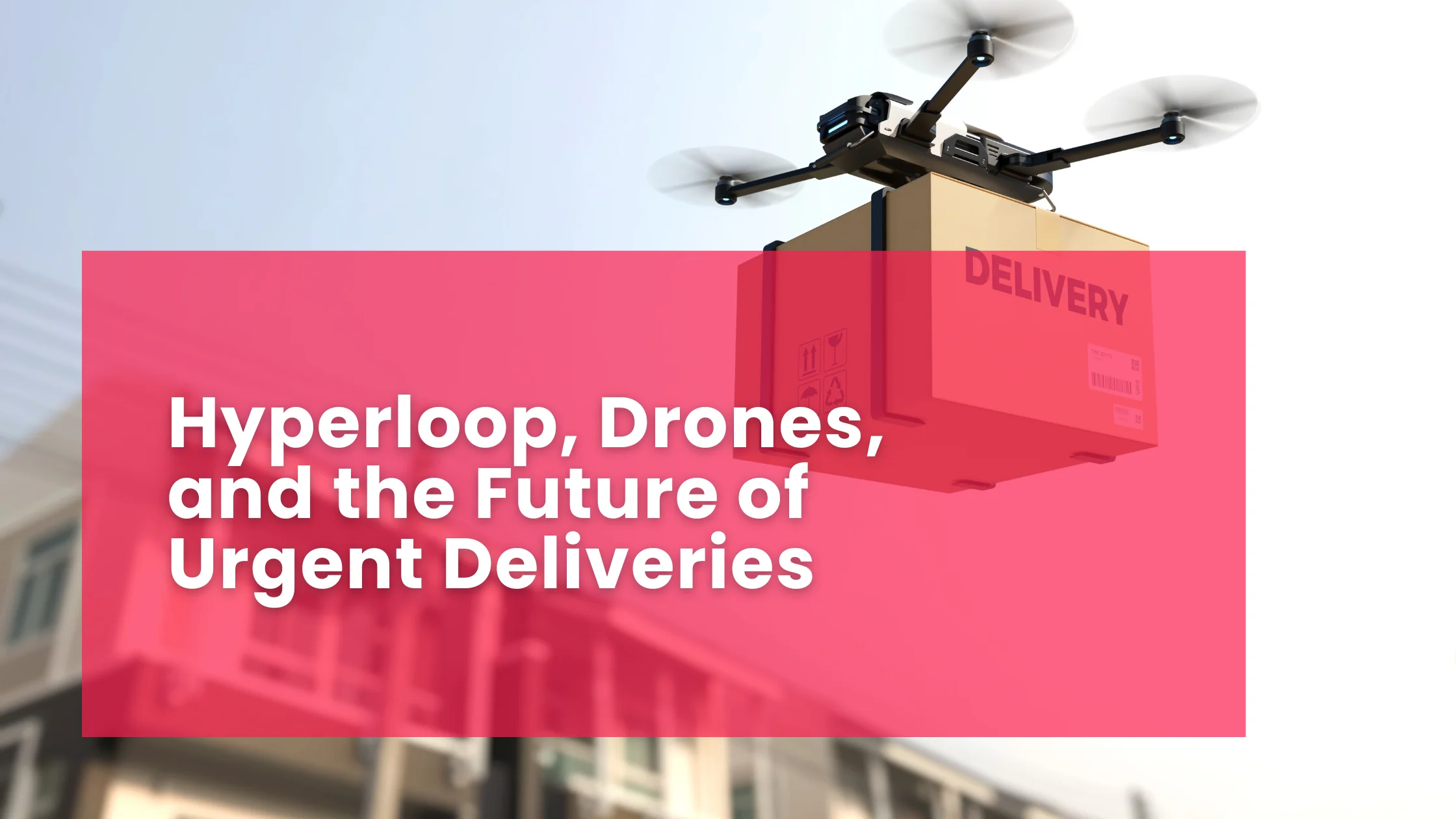
While Hyperloop focuses on high-speed ground transportation, drones are transforming the final stages of the delivery process.
Autonomous aerial vehicles are increasingly being tested and deployed for logistics operations worldwide.
Drones offer unique capabilities that can help overcome some of the limitations associated with traditional transportation methods.
How Delivery Drones Work
Modern logistics drones typically use:
- GPS navigation systems
- Artificial intelligence software
- Autonomous flight controls
- Obstacle detection sensors
- Real-time communication systems
These technologies allow drones to transport packages safely and efficiently with minimal human intervention.
Benefits of Drone Deliveries
Faster Last-Mile Delivery
The final stage of delivery is often the most expensive and time-consuming component of the logistics process.
Drones can bypass:
- Traffic congestion
- Road infrastructure limitations
- Geographic obstacles
This enables faster deliveries to customers and businesses.
Access to Remote Areas
Many regions face logistical challenges due to:
- Mountainous terrain
- Islands
- Rural communities
- Disaster-affected zones
Drones can provide access to locations that may be difficult or costly to reach using conventional transportation methods.
Healthcare and Emergency Applications
One of the most promising uses of drones involves healthcare logistics.
Drones can rapidly transport:
- Medical supplies
- Laboratory samples
- Blood products
- Vaccines
- Emergency equipment
In critical situations, reducing transportation time can save lives.
Reduced Operating Costs
Autonomous drone systems may help lower certain operational expenses by reducing dependence on traditional delivery vehicles for short-distance shipments.
Potential savings may include:
- Fuel costs
- Labor expenses
- Vehicle maintenance
- Route inefficiencies
Current Limitations of Drone Logistics
Despite their potential, drones also face several challenges.
Payload Restrictions
Most commercial delivery drones currently have limited carrying capacity.
Heavy freight shipments still require traditional transportation methods such as:
- Air freight
- Trucking
- Rail transport
- Ocean shipping
Battery Constraints
Flight duration remains a challenge for many drone systems.
Battery limitations affect:
- Range
- Payload capacity
- Operational flexibility
Advances in battery technology will be essential for broader adoption.
Regulatory Compliance
Drone operations are subject to aviation regulations that vary by country.
Key considerations include:
- Airspace management
- Safety requirements
- Licensing
- Privacy concerns
- Cross-border operations
International harmonization of regulations will play a significant role in future expansion.
The Future of Integrated Logistics Networks
The future of urgent deliveries will likely involve multiple transportation technologies working together rather than replacing existing logistics infrastructure.
A typical future shipment may involve:
- Manufacturing facility pickup
- Hyperloop transportation to a regional hub
- Air freight for international transit
- Automated warehouse processing
- Drone-based final delivery
This integrated approach could significantly reduce transit times while maintaining flexibility and reliability.
Artificial Intelligence and Smart Logistics
Emerging transportation technologies are being supported by advancements in artificial intelligence.
AI is helping logistics providers improve:
- Route optimization
- Demand forecasting
- Capacity planning
- Predictive maintenance
- Risk management
By combining AI with autonomous transportation systems, supply chains can become more responsive and resilient.
The Role of Automation in Urgent Deliveries
Automation is becoming a key component of future logistics operations.
Examples include:
- Automated warehouses
- Robotic sorting systems
- Autonomous vehicles
- Smart inventory management
- Real-time tracking platforms
These technologies improve operational efficiency and help reduce delays throughout the supply chain.
What Businesses Should Do Today
While Hyperloop and widespread drone delivery adoption may still be years away in many regions, businesses should begin preparing now.
Recommended strategies include:
Invest in Supply Chain Visibility
Real-time tracking and monitoring technologies improve decision-making and allow businesses to respond quickly to disruptions.
Strengthen Logistics Partnerships
Working with experienced global logistics providers ensures access to the latest transportation solutions and industry expertise.
Build Flexible Supply Chains
Organizations should develop supply chain strategies that can adapt to new transportation technologies as they become commercially viable.
Evaluate Emerging Technologies
Regularly assessing logistics innovations helps businesses identify opportunities to improve efficiency and gain competitive advantages.
Why Traditional Logistics Expertise Still Matters
Despite advancements in transportation technology, successful urgent deliveries will continue to depend on fundamentals such as:
- Customs compliance
- Documentation accuracy
- International regulations
- Trade expertise
- Risk management
- Global transportation networks
Technology alone cannot solve complex international logistics challenges.
Businesses need experienced logistics partners who understand global trade requirements and can integrate new technologies into practical supply chain solutions.
AGOL Worldwide Inc: Helping Businesses Navigate the Future of Logistics
The logistics industry is entering an exciting period of transformation. Innovations such as Hyperloop transportation, autonomous drones, artificial intelligence, and advanced automation systems are reshaping how goods move across global supply chains.
While these technologies continue to evolve, businesses still need dependable logistics solutions that deliver speed, compliance, visibility, and reliability today.
AGOL Worldwide Inc combines global logistics expertise with a forward-looking approach to supply chain innovation. Our team supports businesses worldwide through comprehensive freight forwarding, customs brokerage, supply chain management, international transportation, and trade compliance solutions.
Whether you are managing urgent shipments, expanding into new markets, or optimizing complex international supply chains, AGOL Worldwide Inc provides the expertise and global network required to keep your business moving efficiently.
Partner with AGOL Worldwide Inc
As global logistics continues to evolve, having the right logistics partner becomes more important than ever. AGOL Worldwide Inc helps importers, exporters, manufacturers, technology providers, healthcare organizations, and international businesses navigate today’s challenges while preparing for tomorrow’s opportunities.
Connect with AGOL Worldwide Inc today to discuss customized global logistics, freight forwarding, customs brokerage, and supply chain solutions designed to support your business growth worldwide.